
Why your app campaigns get downloads but no revenue

The short answer
Campaigns that optimize only for installs tend to buy the cheapest users, who rarely convert. Revenue requires optimizing for the right in-app events (or value), clean tracking of those events, and a product flow that actually turns opens into payments. The same pattern appears on Google, Meta and TikTok. More spend on the same install goal usually makes the problem larger.
Talk to our team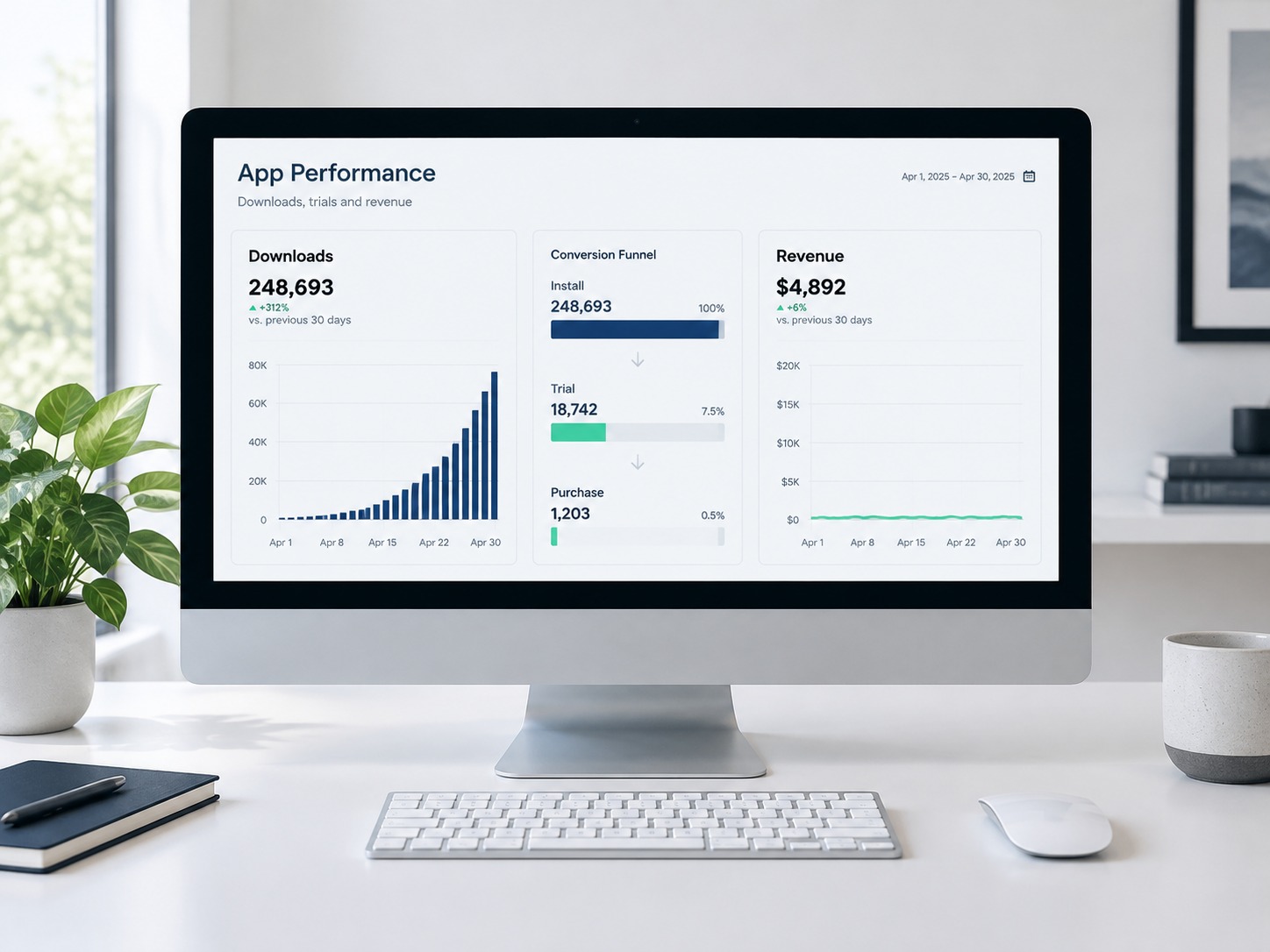
Contents
Downloads measure interest. Revenue measures whether that interest turned into a paying user. For related campaign mechanics, see our guide on how Google App Campaigns work. For full support, see our mobile app marketing services.
Why do app campaigns get downloads but no revenue?
Most cases come from one of three places:
- The campaign is still optimized for installs (or the cheapest available users).
- The in-app events that lead to revenue are not tracked cleanly or not used as the optimization goal.
- Users install but drop off before they reach the paywall, trial, or purchase step.
These three can exist together. The campaign looks successful on cost per install while revenue stays flat.
What this means for your decision: Check the optimization goal and the post-install funnel before you raise budget.
How does optimizing for installs create this gap?
Google App Campaigns, Meta app promotion campaigns and TikTok app campaigns can all optimize for installs, for in-app events, or for value. When the goal is installs, the system looks for the cheapest users who will download the app.
Those users often have low intent. They may never open the app, never finish onboarding, or never reach a purchase. The dashboard shows rising downloads and a low CPI while trials and revenue stay low.
What this means for your decision: A strong install volume on an install-optimized campaign is not evidence that the traffic is valuable.
What should you optimize for instead?
Once you have enough volume, move the optimization goal to the deepest reliable event that still occurs frequently enough for the system to learn.
Common choices:
- Trial start (for subscription apps)
- First purchase or subscription start
- A strong activation event that predicts payment
On Google App Campaigns, Google’s guidance is to pick an in-app action completed by at least 10 different users per day in the campaign before optimizing directly for that action, and to set the daily budget high enough relative to the target (at least 10 times the target CPA for action campaigns).
If no revenue event reaches that volume yet, Google recommends optimizing for an earlier "proxy action" that predicts payment, such as completing onboarding or starting a trial.
If you can pass accurate revenue values, value-based bidding (target ROAS or Maximize conversion value) becomes available on Google.
What this means for your decision: Optimize for the earliest event that still correlates with revenue and has enough volume for the platform. Do not stay on pure install optimization once that volume exists.
Does this work the same on Meta and TikTok?
Yes. Both platforms offer the same three directions for app campaigns: installs, app events, and value. Value optimization is not available to every account on either platform.
On Meta, the app promotion objective lets you optimize for installs, for App Events, or for maximize value of conversions. Meta’s learning phase guidance states that an ad set usually exits learning after about 50 results in the week after its last significant edit. From Meta’s Best Practices for Web and App Event Optimization: "Try to choose an event with more than 100 conversions over the 2 weeks prior to starting the campaign."
On TikTok, app campaigns can optimize for installs, for in-app events (App Event Optimization), or for value (Value-based Optimization). TikTok states that volatility typically starts to decline after about 25 campaign results or 7 days. For value-based optimization on apps, TikTok notes that achieving 50 conversions is the most significant indicator of passing the learning phase.
What this means for your decision: The principle is the same on all three platforms. Move off pure install optimization once you have a reliable deeper event that the system can learn from.
Talk to our teamHow do product and measurement gaps affect revenue?
Even with the right campaign goal, revenue stays low if:
- Onboarding is long or unclear, so most users never reach the paywall.
- The paywall or pricing does not match the value users just experienced.
- Revenue events are missing, delayed, or not sent back to the ad platform (especially common on iOS without proper SKAdNetwork / AdAttributionKit or server-side setup).
On iOS, incomplete event mapping means the campaign receives weak signals and continues to optimize for volume instead of value.
What this means for your decision: Confirm that the events you optimize for actually fire and reach the platform. Then check where users drop between open and payment.
When is more spend not the answer?
Raising budget on an install-optimized campaign usually buys more low-intent users. The gap between downloads and revenue grows.
More spend is useful only after:
- The campaign optimizes for a revenue-related event or value.
- Those events are tracked cleanly and attributed.
- The post-install flow converts a reasonable share of users who open the app.
If measurement is the main constraint, start with a clean setup. See our MMP data audit and setup services.
What this means for your decision: Fix the optimization goal and the funnel before you scale. More budget on the same setup rarely creates revenue.
FAQ
The campaign is likely optimized for installs. Cheap installs often come from users who do not convert. Move the goal to a deeper event once volume allows.
The deepest event that still has enough volume for the platform to learn and that correlates with payment. Trial start or first purchase are common choices.
No. The same pattern appears on Meta and TikTok. See the section on Meta and TikTok for the platform-specific guidance on events and learning phase.
Yes. Incomplete SKAdNetwork or AdAttributionKit configuration, or missing server-side event forwarding, can hide revenue from the campaign and from your reports.
In our experience, keep a controlled test running so you can measure the effect of funnel changes, but do not scale spend until the revenue events appear.
What to do next
Not sure whether the gap is in your campaign goal, your event tracking, or the post-install flow? Talk to our team. We will look at your setup and tell you where we would start.
Talk to our teamRelated Articles
How to structure Apple Search Ads: brand, generic, competitor and discovery
November 23, 2026
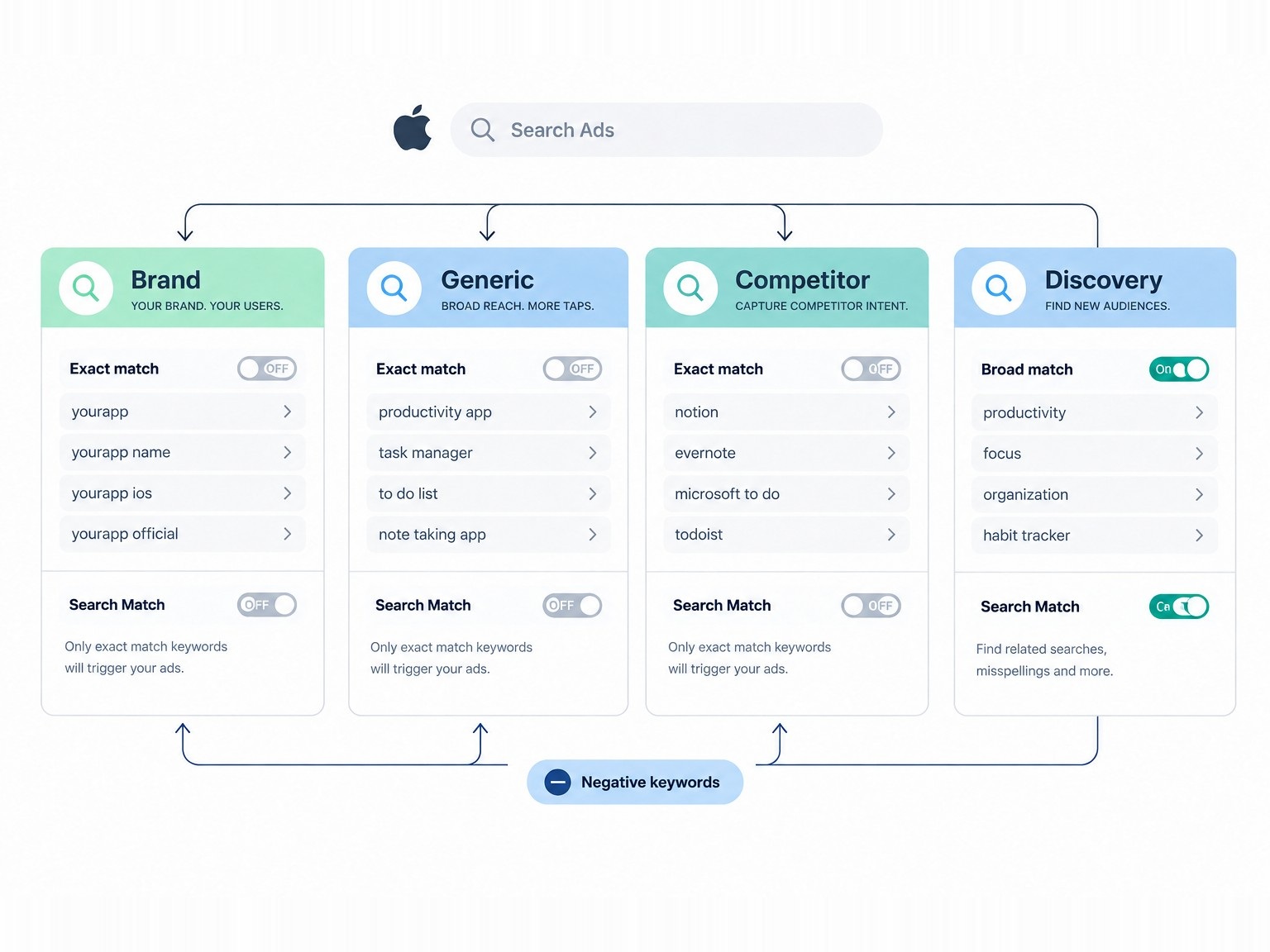
How to structure Apple Search Ads into brand, generic, competitor and discovery campaigns, plus when management tools help and what the free plans cover.
Read More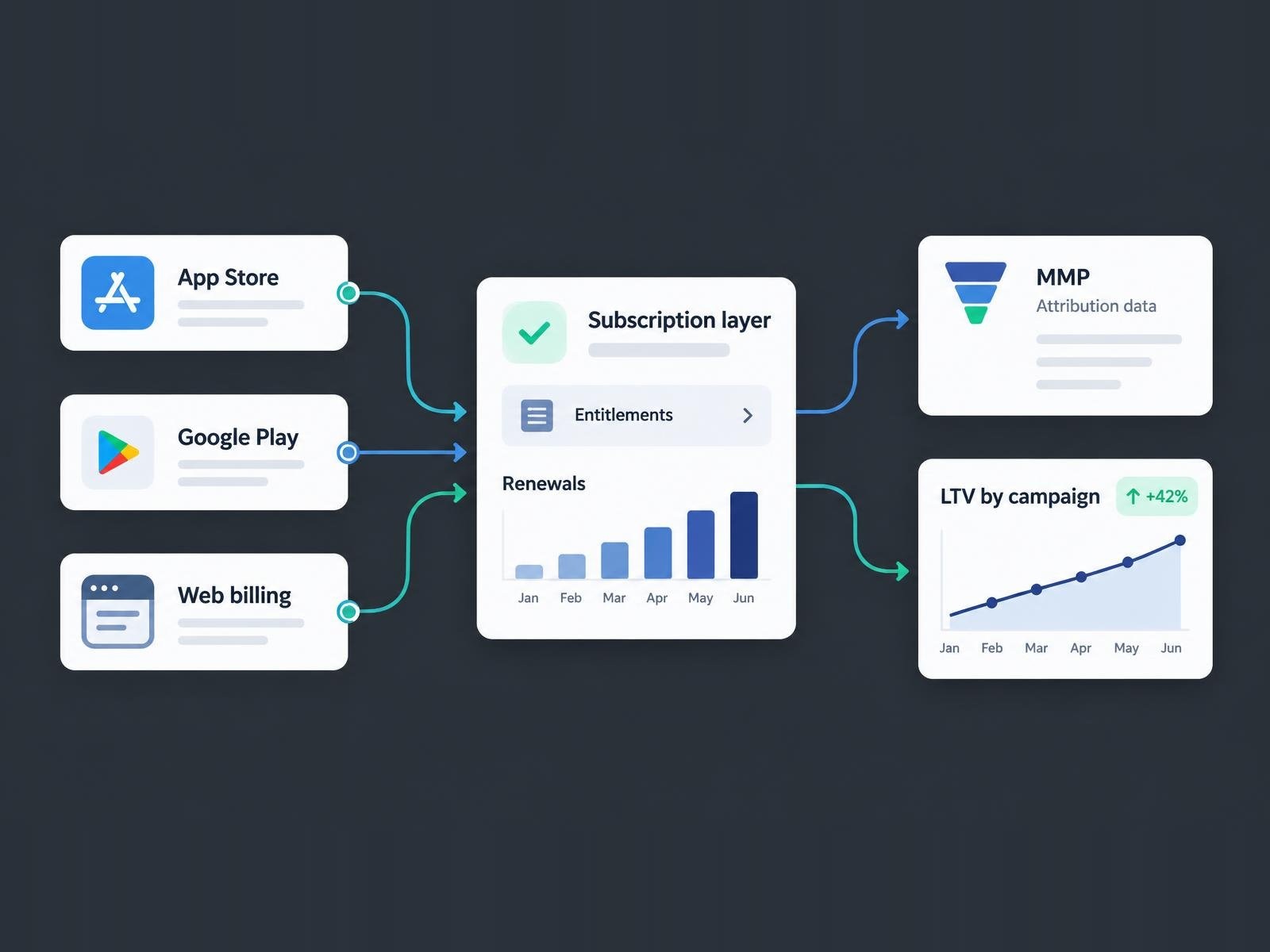
What is RevenueCat and Why Is It a Powerful Tool for Apps?
November 23, 2026
What RevenueCat does for apps, why the cross-platform subscription layer matters, how pricing works, and when it is the right choice.
Read More
How Google App Campaigns Work, and Which Levers You Actually Control
November 23, 2026
Google App Campaigns are mostly automated. See which levers you still control, why in-app events matter most, and what to check before you scale.
Read More