
How to Increase Organic Installs with Metadata, Creatives and Paid Data

The short answer
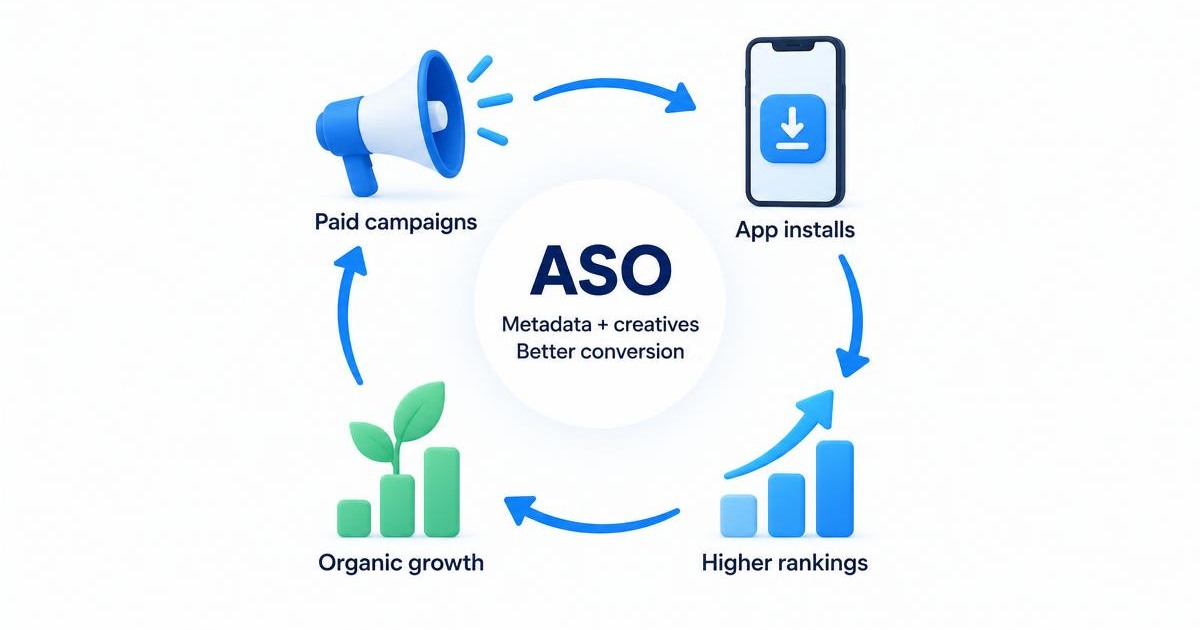
Organic installs rise when the store listing matches what people search for, the creatives convert that traffic, and paid campaigns supply the install volume and signals the algorithms reward. Metadata drives discovery. Screenshots and video drive conversion. Ratings and reviews protect both. Paid and organic work better together than either alone.
Contents
- How does store metadata affect organic installs?
- Why does localization matter?
- How do screenshots and video drive visibility and conversion?
- How do ratings and reviews influence ranking and installs?
- How does your website relate to app store performance?
- What should you measure and with which tools?
- How does information in the app code affect the stores?
- How does install volume interact with ASO?
- How do you combine paid campaigns with ASO?
- FAQ
- What to do next
ASO is the system that turns store traffic into installs. The parts reinforce each other.
How does store metadata affect organic installs?
The stores index different fields.
On the App Store the strongest text signals are the app name (30 characters), subtitle (30 characters), and the hidden keyword field (up to 100 characters). The long description is not indexed for search.
On Google Play the title (30 characters), short description (80 characters), and long description (up to 4,000 characters) are all indexed. Natural language matters more than keyword stuffing.
Place the primary keyword in the name where it fits naturally. Use the subtitle or short description for the main benefit plus secondary terms. Avoid repeating the same words across fields.
What this means for your decision: Metadata is the highest-leverage text you control. Treat the name and subtitle as ranking assets, not branding afterthoughts.
Why does localization matter?
Different markets search with different words. Translating the English listing word-for-word often misses the local terms people actually type.
Prioritize markets that already send traffic or revenue. Localize metadata first (name, subtitle, keywords), then screenshot captions, then the description. Check which localizations each storefront indexes. Some countries index more than one language, giving extra keyword space.
Screenshots should show the localized interface where the language is supported. Cultural adaptation beats literal translation.
What this means for your decision: Localization expands the set of keywords you can rank for without changing the product. Start with markets that already convert.
How do screenshots and video drive visibility and conversion?
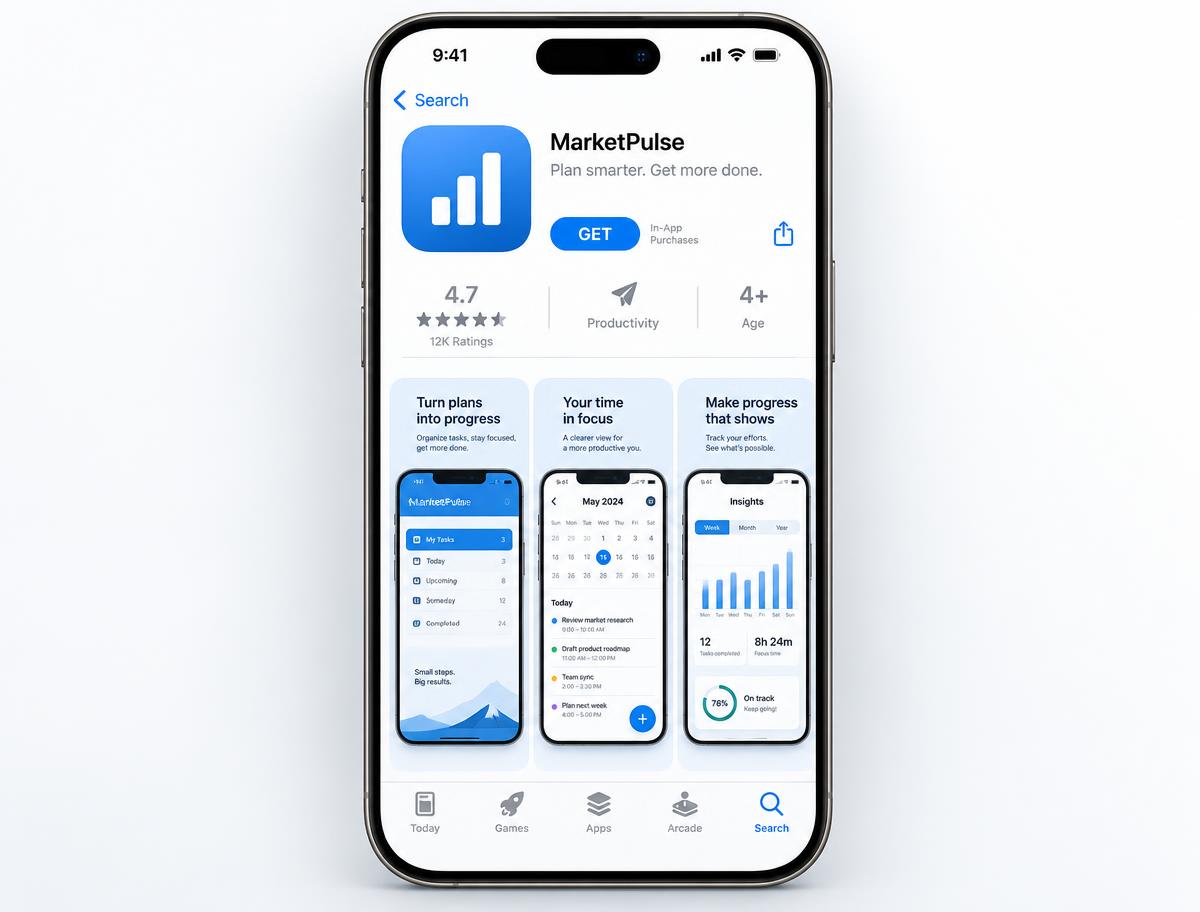
Most people decide from the icon and the first two or three screenshots. Apple shows the first screenshots in search results when no preview is available.
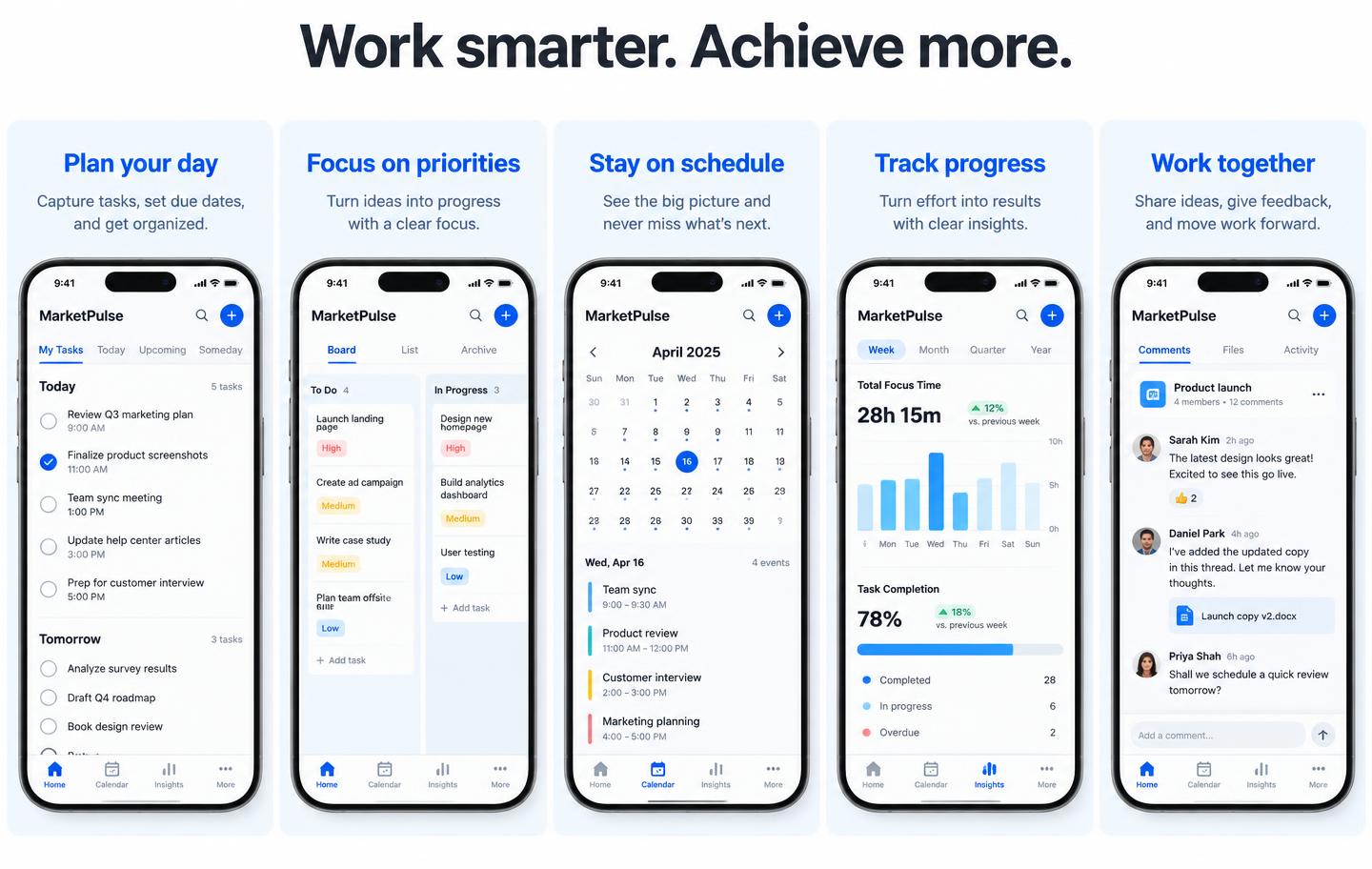
Design the first three screenshots as a short story: one clear benefit per image, readable text at thumbnail size, and proof from the interface. Test icons, screenshot order, and captions with the stores’ native experiments.
Video (app preview or promo video) helps when the product needs demonstration. Keep it short for cold traffic and make sure it works muted.
What this means for your decision: Creatives convert the traffic metadata brings. Weak first screenshots waste ranking gains.
How do ratings and reviews influence ranking and installs?
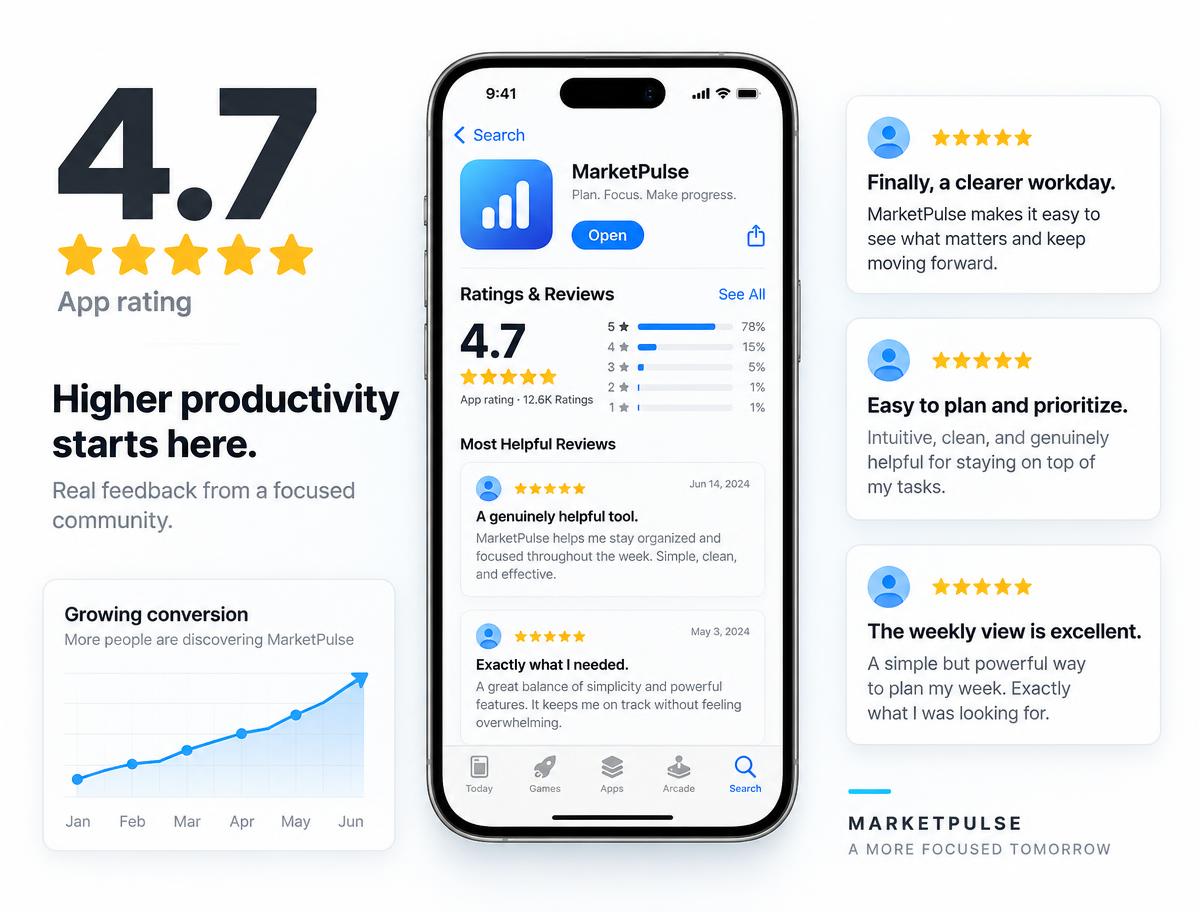
Ratings affect both ranking and conversion. Apps below roughly 3.5 stars tend to rank for fewer keywords and convert worse. Moving from the low 3s to the mid-4s commonly produces large conversion lifts. Recent reviews and review volume carry more weight than old ones.
Ask for reviews at positive moments using the official in-app prompts (Apple limits how often the prompt can appear). Reply to reviews, especially critical ones. Fix the product issues that generate negative feedback. Do not buy reviews or incentivize ratings against store rules.
What this means for your decision: Ratings are both a trust signal and a ranking signal. Protecting the average is cheaper than recovering from a drop.
How does your website relate to app store performance?
The website and the app store listing should tell the same story. Branded search, direct traffic, and links from the website support overall brand signals. Consistent messaging between the site and the store listing improves conversion when people land on either.
Technical issues on the website (slow pages, broken tracking) do not directly change store ranking, but a weak site can reduce the quality of traffic you send to the stores and make measurement harder.
What this means for your decision: Align the website and store listing. They reinforce each other more than they compete.
What should you measure and with which tools?
Track in the native consoles first: impressions, product page views, conversion rate, and installs by source. Then layer on keyword rank tracking, competitor movement, and creative performance.
Useful tools include:
- Native: App Store Connect, Google Play Console, Product Page Optimization, Apple Ads keyword popularity
- Keyword and rank tracking: AppTweak, Mobile Action, Appfigures
- Broader market intelligence: Sensor Tower (enterprise)
Start with one tracker that covers your priority markets. Measure the effect of metadata or creative changes against a baseline.
What this means for your decision: Measure the full path from impression to install. Ranking without conversion is incomplete.
How does information in the app code affect the stores?
Crash rates, ANR rates, and overall stability are ranking factors on Google Play and affect featuring and visibility on both stores. Google has documented thresholds where high crash or ANR rates reduce how often the app is shown.
Update frequency, permission requests, and compliance with store policies also matter. Poor technical quality can offset strong metadata.
What this means for your decision: Fix stability issues before expecting ASO gains to hold. The stores reward apps that users can actually use.
How does install volume interact with ASO?
The stores reward apps that people choose and keep. Higher install velocity and better conversion rates strengthen ranking signals. A sudden spike from paid can lift keyword and category rankings. When the spike ends, rankings often settle back unless the listing continues to convert well on its own.
Consistent volume is more useful than one-time bursts for long-term ranking.
What this means for your decision: Volume helps, but only when the listing converts. Sustainable organic growth depends on both.
How do you combine paid campaigns with ASO?
Paid and organic reinforce each other.
- Paid traffic increases install velocity, which can improve keyword and category rankings.
- A stronger listing converts more of the paid traffic, lowering effective CPI.
- Creatives and messaging that win in ads can be adapted for screenshots and text.
- Keywords that convert in Apple Ads can inform metadata.
The loop works when the listing is ready to convert the traffic paid sends. Launching paid against a weak listing wastes budget and produces weaker ranking signals.
PUBLICO runs full 360 app promotion that covers ASO, creatives, paid user acquisition, and measurement so the channels support each other.
What this means for your decision: Treat ASO and paid as one system. Optimize the listing before scaling spend, then feed paid learnings back into the listing.
FAQ
The app name on both stores. It carries the strongest ranking weight.
Primarily conversion. The first screenshots appear in search results and determine whether people tap and install.
They affect both ranking and conversion. Low ratings reduce visibility and conversion rates.
Yes, by increasing install velocity and providing ranking signals. The effect is stronger when the listing already converts well.
Prioritize markets that already send traffic or revenue. Localize metadata first.
What to do next
Want a clear recommendation based on your actual channels and spend?
Talk to our team.
Talk to our teamRelated Articles
 ASO
Top ASO Tools in 2026, Broken Down by What They Actually Do Well
April 28, 2026
In today's competitive app market, succeeding in the App Store and Google Play demands more than basic keyword stuffing.
Read More