
How to Choose the Right Mobile Measurement Partner (MMP) for Your App
PUBLICO offers MMP setup and audit services. Pricing details below were checked against public vendor pages in November 2026 and can change.

The short answer
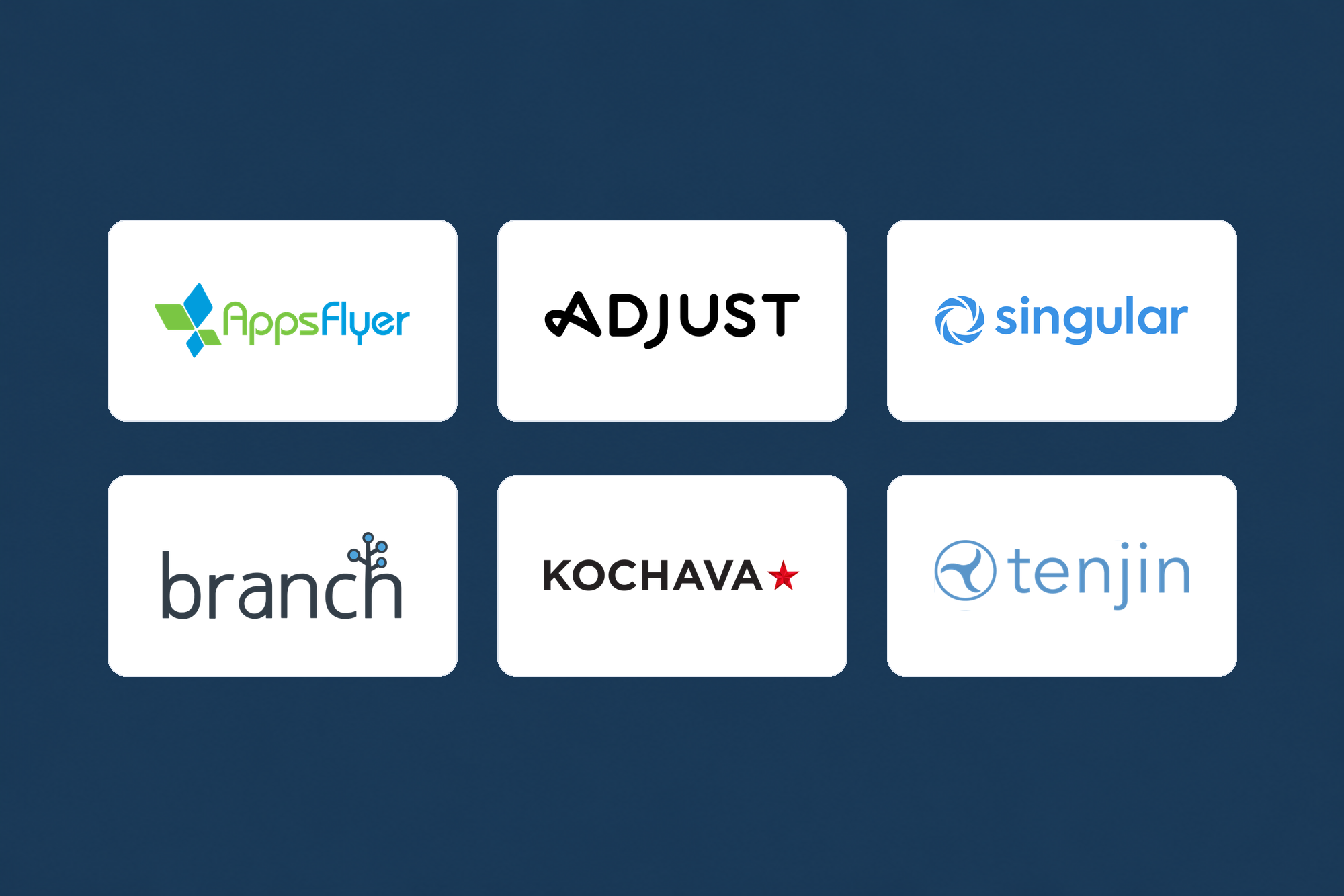
For most apps spending meaningful money on user acquisition, AppsFlyer and Adjust are the safest starting points. Singular is strongest when you want spend and attribution together, Branch is best for deep linking, and Tenjin is worth checking for simple all-inclusive pricing. Free tiers exist on all of them, but most apps outgrow them quickly once real paid campaigns start.
Contents
Running paid user acquisition without an MMP is like running Google Ads without conversion tracking. You are spending real money and guessing which channel actually worked. An MMP is the independent layer that tells you, with reasonable confidence, which channel, campaign and creative drove an install, signup or purchase.
What is an MMP and why do you need one?
An MMP (Mobile Measurement Partner) is a third-party platform that attributes app installs and in-app events to the marketing channels that drove them.
Ad platforms have every incentive to claim credit for installs. An independent MMP applies one set of rules across all channels and gives you a single source of truth. It also helps with fraud detection, privacy requirements (including Apple’s ATT and SKAN frameworks), and faster decisions about where to move budget.
What this means for your decision: If you are spending real money on app installs, an MMP is not optional. Without one, you are flying partly blind.
How does an MMP actually work?
- You integrate its SDK into the app. The SDK collects install and in-app event data.
- The MMP attributes those installs and events using device signals, probabilistic matching, or Apple’s privacy frameworks (SKAdNetwork and AdAttributionKit).
- It consolidates the data from every ad network into one dashboard and sends postbacks back to the platforms so their algorithms can optimise.
This gives you one place to see performance instead of stitching together numbers from multiple dashboards.
Which MMPs are commonly used?
The main platforms used by teams running meaningful paid budgets are:
- AppsFlyer - widest ad-network integrations and strong enterprise features.
- Adjust - solid privacy and fraud tools, often more cost-competitive at similar volume.
- Singular - strongest when you want ad spend, creative performance and attribution in one view.
- Branch - best-in-class deep linking and web-to-app tracking.
- Kochava - useful when you need measurement across mobile, CTV and web.
- Tenjin - simple all-inclusive pricing with the same core features on every plan.
All of them can handle SKAN and AdAttributionKit when set up correctly. The right choice depends on your scale, the channels you buy, and how much you care about cost transparency versus deep linking or fraud tools.
What do the free plans really include?
Public pricing pages (checked November 2026) show these free-tier limits:
- AppsFlyer Zero: free for owned media; includes a Welcome Package of 12,000 free conversions in the first 12 months. Not suitable for paid activities. Growth plan is $0.07 per conversion after that package.
- Adjust Base: free, up to 1,500 monthly attributions for the first 12 months (up to 18,000 annual).
- Singular Free: 15,000 paid conversions. Growth around $0.05 per conversion.
- Kochava Free App Analytics: up to 10,000 attributed conversions per month. Foundation starts at $500/month.
- Tenjin Free: 2,000 conversions per month, forever, with all core features. Extra conversions $0.04 each. Paid plans start at $200/month.
- Branch: limited free options; mainly trials or low entry paid tiers.
Three patterns show up consistently:
- Free tiers are capped low. Most apps outgrow them during the first serious campaign.
- Full cost aggregation is often limited or missing on free plans.
- Fraud protection, advanced audiences, raw data and API access are frequently add-ons. Tenjin is the main exception that keeps the same core features on every plan.
What this means for your decision: Budget for the paid tier and the add-ons you will actually need, not just the free-plan headline.
How do they connect with RevenueCat?
Yes. AppsFlyer, Adjust, Singular, Branch, Kochava and Tenjin all have official native integrations with RevenueCat.
RevenueCat is not an attribution platform. It sends subscription lifecycle events (purchases, renewals, cancellations) to your MMP so the MMP can attribute real revenue, including revenue that happens when the app is closed, back to the campaign that drove the install.
Once you turn on the RevenueCat integration, remove any client-side revenue tracking from the MMP SDK. Otherwise revenue is counted twice.
Why “it’s integrated” is not the same as “it’s working”?
Getting the SDK in is the easy part. The expensive mistake is treating the integration as a one-time setup.
Discrepancies between platforms are normal. A small gap is healthy. A large unexplained gap usually means money is being misattributed or lost.
Tracking also breaks quietly. An app update can stop an event from firing. A change in the consent flow can drop installs into “unattributed.” The campaigns keep running on broken signals until someone notices.
Serious programs treat MMP management as ongoing work: regular reconciliation, event checks after every release, and postback health monitoring.
What this means for your decision: Ask who owns the ongoing audit, not just the initial integration.
How should you choose?
- Match the pricing model to how your app actually grows.
- Decide whether you need raw data exports and API access or a dashboard is enough.
- Confirm fraud protection and privacy tooling, and ask what they cost beyond the base plan.
- Check support for the ad networks, CRM and BI tools you already use.
- Budget for the total cost, including add-ons, from day one.
There is no universal best MMP. The right one depends on your budget, channels and how deep your measurement needs actually go.
For the acquisition side, see how to increase organic installs with metadata, creatives and paid data.
Frequently asked questions.
Neither is universally better. AppsFlyer has broader integration coverage. Adjust is often more cost-effective at similar scale.
Tenjin is the closest. Its paid plans include the full feature set without extra fees.
You can migrate, but historical attribution data usually does not transfer. Plan the switch carefully.
If you only run one platform and spend is low, the platform’s own reporting can be enough. Once you add a second channel or meaningful budget, an MMP becomes useful.
What to do next
Want a clear recommendation based on your actual channels and spend?
Talk to our team. We will look at your setup and tell you where we would start.
Talk to our teamRelated Articles
 Measurement & Analytics
Why is my MMP not showing iOS attribution data?
November 13, 2026
Why SKAN, AdAttributionKit and ATT leave gaps in your MMP's iOS data, what commonly breaks, and what to check before raising iOS spend.
Read More